
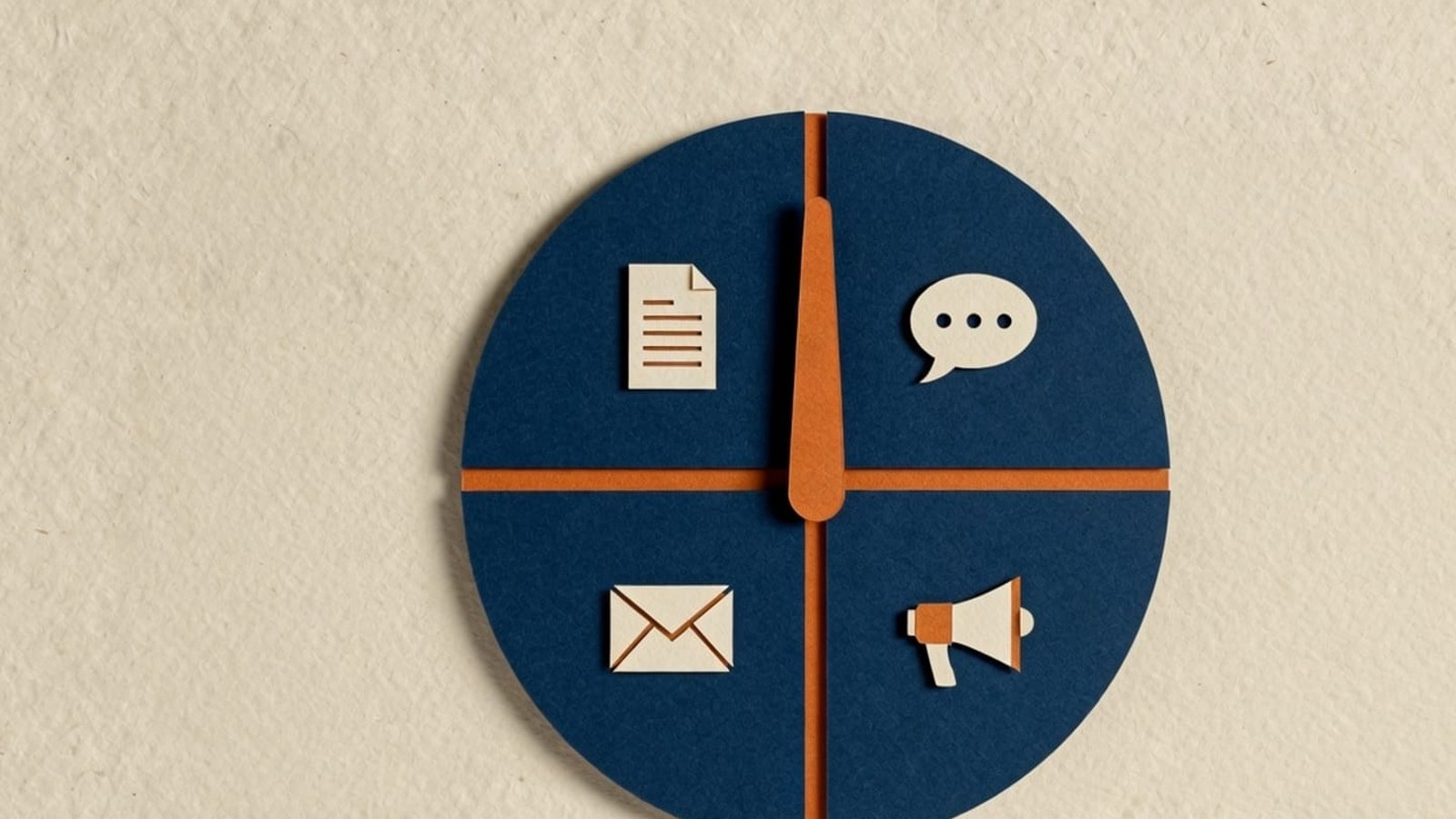
Most “AI content workflow” guides cover one channel. The actual job is to turn one idea into everything a campaign needs. This is the run sheet LOKAL uses: one brief to published (or ready) blog, social cuts, email, and ad variants in about an hour. It is the same sequence we taught at Claude for Marketing in Makati on 8 July. Three human checkpoints on purpose.
One brief, one hour, four formats. The schedule only holds because of the three gates — fact, voice, go — and because the brief was already answered before the clock started. If it wasn’t, stop and run the five-question teardown first. Generating faster from a vague brief is how you make slop at scale.
Before you start the clock
Do not start the clock without these three.
The first time you run this, gathering them is the work; after that they live in the Campaign Brain and the clock can start on time.
- 01
Brand voice one-pager
AU English, banned phrases, three to five example paragraphs that sound like you. Not a 40-page brand book — a page the model will actually use.
- 02
One keyword or angle, plus sources
The pillar needs a point of view and something to cite. Paste the source material; don’t ask the model to go find it.
- 03
The offer
What the reader can do, by when, on what terms. If the offer isn’t in the brief, the CTA will be invented, and invented CTAs are how you get claims problems.
If you don’t already have the voice, offers and past winners loaded somewhere permanent, build that first — the 45-minute Campaign Brain setup is the version we run, so this session doesn’t start with a paste. How the team actually uses AI across drafting, visuals, ads and analysis is in How we’re using AI in our marketing.
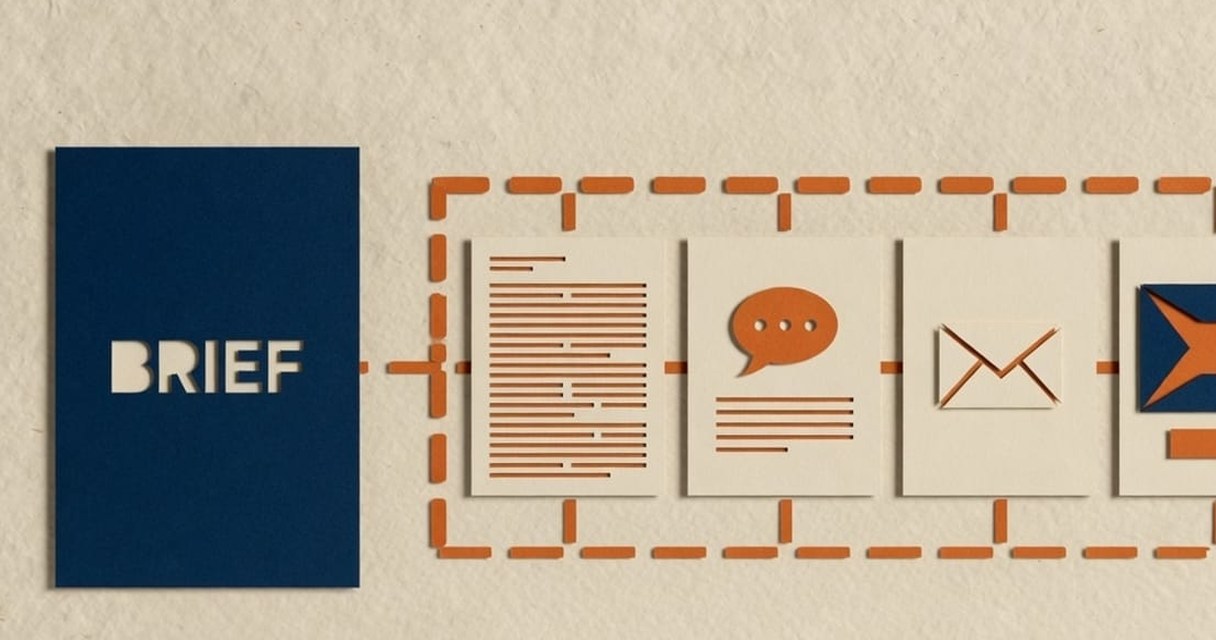
Minutes 0–12: draft the pillar piece
Draft the pillar in Claude — 1,200 to 1,800 words.
That’s the asset everything else is cut from, so it has to exist before social, email or ads. Cowork can sit in a shared folder if the sources are already there. ChatGPT or Gemini will also do this job; Claude’s edge is prose and long source documents, which is why it’s our default for the pillar.
Twelve minutes is a first draft, not a publish. You are aiming for structure, the argument, and the offer in the right place. Polish comes after Gate 1, not before. If prompting itself is still the shaky part, the five ingredients and 13 starter prompts will get a cleaner first pass than “write a blog about this.”
Minutes 12–22: QC Gate 1 — fact-check
This gate is not optional and it is not a skim.
Every number, name, date, quote and citation gets checked against a source you can open. Anything that can’t be verified comes out, even if it sounded good.
Then add one human-only specific the model could not have invented: a guest quote, a number from your own data, a named competitor the brief actually named. That single addition is usually the difference between a usable draft and interchangeable slop. Treat confident-sounding output as unverified until someone has actually checked it — the same rule as the 90-second pass in our AI guardrail playbook.
Minutes 30–38: email
One nurture or newsletter from the same brief.
Two or three subject lines. One CTA — the same behaviour the brief named, not a new one. Then a prospect version and an existing-customer version: same argument, different knowledge of the reader. Eight minutes is enough for that split if you don’t let the model invent a second offer.
Minutes 38–48: ad variants
Three to five headline / description / primary-text variants for Google and Meta, cut from the pillar and the offer.
Claude drafts; Google AI Max / Performance Max and Meta Advantage+ test. Meta reports an average 22% ROAS lift on Advantage+ Sales versus manual — that’s an optimisation claim, not a reason to skip the draft or the brand check.
2026 rule, don’t skip it: AI-generated ad elements carry an automated-content label. Disclose what the platform requires. Do not spend against variants nobody has read. Spend approval is not part of this ten minutes — it sits in the list of things we don’t automate.
Minutes 48–55: QC Gate 2 — voice and visual
Read the pillar, the social cuts, the email and the ads side by side against the brand voice one-pager.
Then the visuals in the same pass. You are looking for one campaign, not four channels that happen to share a keyword. If a caption has drifted into corporate-neutral, or an image could belong to a competitor, fix it now. Seven minutes is enough to catch that. It is not enough to rewrite the session — which is why Gate 1 exists.
Minutes 55–60: QC Gate 3 — approval and publish
A named person approves and publishes, or parks anything that still needs a claim check or a spend sign-off.
The session ends with a decision, not a folder of drafts. “Someone will post it later” is how the work leaks into Thursday.
What we don’t automate
The session is a drafting machine with three human checkpoints.
It is not an autopilot. These six stay human on purpose — they are the line in Create, Understand, Act that we don’t cross, applied to this clock.
The tool stack
Claude is the default for prose.
The rest of the stack is whatever already sits in the channel. Swap anything in the ‘We use’ column if you have to; do not swap out the gates.
| Job | We use | Also works |
|---|---|---|
| Pillar draft | Claude | ChatGPT, Gemini |
| Social cuts | Claude | Buffer AI, SocialBee |
| Visuals | Canva Magic Media | Firefly, Leonardo |
| Claude | Klaviyo AI, Mailchimp | |
| Ad drafts | Claude | ChatGPT |
| Ad optimisation | Google AI Max / PMax, Meta Advantage+ | — |
| Reporting | Claude, ChatGPT | Perplexity, NotebookLM |
LOKAL has trained approximately 1,500 people in the last two years. The pattern that sticks is not a new tool. It’s a clock with gates.
Want it run live on your own accounts, with your briefs on the table? That’s the second half of Claude for Marketing. Team-wide, it’s AI training in the Philippines. If you’d rather someone else own the operating rhythm, that’s AI consulting.
The schedule only holds because of the three gates — fact, voice, go — and because the brief was already answered before the clock started.
Keep going: the AI guides hub has the rest of the marketing series, and the Insights archive carries everything else the team publishes.
FAQ
Common questions
How long does this actually take the first time?
The first run will take roughly twice as long, because the brand voice one-pager and the source material aren’t sitting ready. Once those exist, the schedule holds. We run this sequence in the Claude for Marketing session — same clock.
Which tool should we use if we don’t use Claude?
ChatGPT or Gemini will draft the pillar, the social cuts, the email and the ad variants. Claude’s edge is prose and long source documents; the workflow doesn’t depend on it. The QC gates do not change whichever model you use. See the AI tools directory for what’s priced in pesos.
Do we need a paid plan?
No. A free plan will get you through the session. A paid plan (Claude Pro, ChatGPT Go or Plus, Google AI Pro) is worth it once you’re doing this weekly — longer documents, higher rate limits, and project or memory features so you stop re-pasting the brand voice.
What should we never automate?
The strategic angle, fact verification, the final voice read, compliance and claims, ad spend approval, and final accountability. Those six stay human on purpose. Everything else in the session is a draft.
How do we stop the output going generic?
Put the proprietary fact in the brief before you start the clock, and add one human-only specific at QC Gate 1. Generic output is almost always a brief problem, not a model problem — which is why the five-question teardown sits upstream of this run sheet.
Your next step
Want your team running this inside a quarter?
If you want help putting this into practice, bring one task and its constraints.
We teach this exact run sheet against your live briefs — pillar, social, email, ads — with the three QC gates wired in. Same sequence from the Claude for Marketing session, built as a team habit rather than a one-off blog post.
Minutes 22–30: cut into social
Cut the pillar, don’t rewrite it from scratch. Four shapes from the same argument:
Visuals run in parallel via Canva Magic Media, not after. A designer still finishes anything that will run paid or on a brand account; the model gets concepts and first frames moving so the eight minutes aren’t spent staring at a blank artboard.