
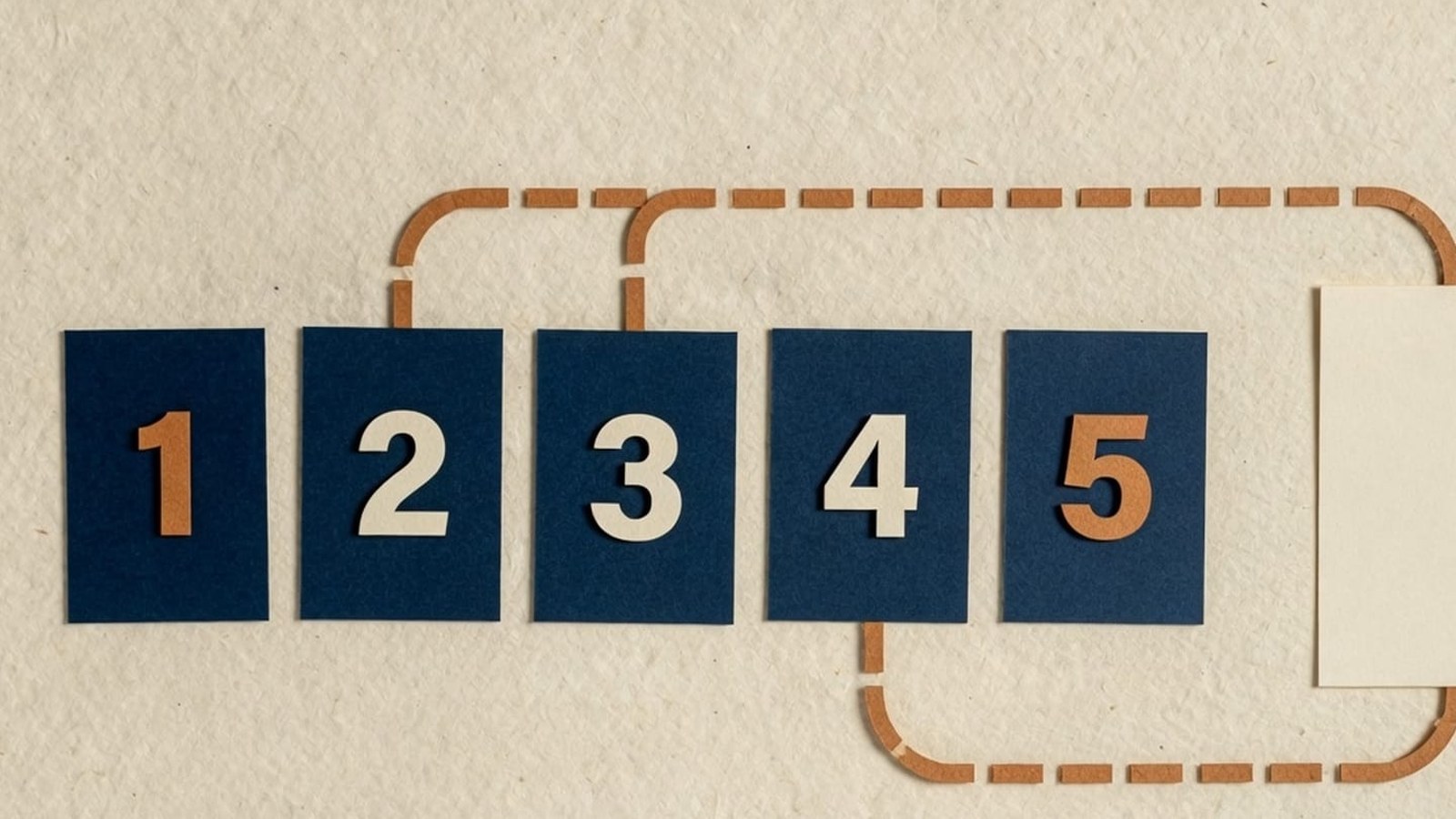
A marketing brief is a prompt with a longer shelf life. Five questions — who it’s for, what they do next, the single message, the proprietary edge, and the constraints — asked before anyone opens a chat window, are what stop AI from turning a vague brief into confident slop.
BetterBriefs’ global briefing study (1,700+ respondents, 70+ countries, presented at IPA EffWorks) is the source usually quoted for this: roughly a third of marketing budgets wasted from poor briefs, 80% of marketers saying they brief well, 10% of agencies agreeing, and a $200 billion “black hole.” BetterBriefs sells briefing training — treat the figures as their study, not as LOKAL research.
That gap existed before generative AI. AI hasn’t fixed it. It’s made it faster to act on and harder to spot.
Why AI makes a bad brief worse, not better
A vague brief handed to a skilled human produces a mediocre draft and a clarifying email.
A vague brief handed to AI produces a finished-looking paragraph in eight seconds — confident, fluent, and empty. The industry now has a name for the result: “AI slop” — low-effort, repetitive content with a neutral corporate tone and no original insight, and it’s increasingly penalised rather than rewarded. Meta, TikTok and YouTube have all rolled out suppression aimed at synthetic, low-quality content at scale.
A vague brief handed to AI produces a finished-looking paragraph in eight seconds — confident, fluent, and empty.
The mechanism is simple: output quality is bounded by input quality. A marketing brief is a prompt with a longer shelf life. If the brief never names a person, a behaviour, a single idea or a fact the model cannot invent, the model will invent a tone instead — “unparalleled luxury,” “world-class amenities,” “experience the difference” — and ship it looking done.
This is also why prompting tricks don’t rescue a bad brief. Our short course on prompting basics still holds: role, task, context, format, examples. None of those five ingredients can supply an audience or an edge the brief never gave. And if you’re still deciding what should go to a model at all, sort the task first with Create, Understand, Act — then come back and brief it.
The five questions
Ask these before anyone opens a chat window.
They work for a full campaign brief or a one-line Slack prompt. If you can’t answer one of them in a sentence, you’re not ready to generate anything yet.
- 01
Who is it for?
Not a demographic bracket — a specific person in a specific moment. Anniversary couple, 38, comparing three hotels on a phone at 10pm. “Affluent travellers 30–45” is a media buy, not an audience. Only 38% of agencies in the BetterBriefs study say they’re clear on the target audience. If the model has to guess the person, it will write for everyone, which is to say for no one.
- 02
What do they do right after seeing it?
Most briefs describe a feeling: “make it sound premium,” “book-worthy,” “on brand.” AI needs a behaviour: click, reply, book, forward, check availability, add to cart. If you cannot name the next action in a verb, you don’t have a brief. You have a mood board.
- 03
What’s the single message?
One idea, statable in a sentence. Not a list of amenities. Not “luxury meets comfort.” If you have three messages, you have none — the model will average them into a paragraph that could sit on any competitor’s page.
- 04
What do we know that they don’t?
The proprietary fact a generic model cannot invent. Highest-leverage question of the five. Guest reviews that cite the plunge pool more than the view. The only suite with in-suite breakfast. A number you can defend. Without this, the output will be fluent and interchangeable, which is exactly what the platforms are now suppressing.
- 05
What are the constraints?
Voice, format, length, mandatories, approvals, deadline. Warm first-person plural. No exclamation marks. 150–180 words plus a 40-word meta. Legal line on butler service. Friday, 5pm. Constraints are not bureaucracy. They are the rails that stop a model filling space with adjectives.
The Deluxe Suites teardown
Here is a brief we see, in this shape, constantly. Hotel, new suite page, Friday deadline. It looks complete. It is not.
Write copy for our new Deluxe Suites page. Make it sound premium and book-worthy. Keep it on brand. Need it by Friday.
Fed to a model, that brief produces this in about eight seconds:
Escape to unparalleled luxury in our Deluxe Suites, where elegant design meets modern comfort. Enjoy breathtaking views, plush furnishings, and world-class amenities during your unforgettable stay. Book now and experience the difference of true five-star hospitality.
Nothing in that paragraph is false. Nothing in it is true of this hotel either. It could run on any Deluxe Suites page in Southeast Asia, which is why it will not move a booking and why it is increasingly the kind of copy the platforms bury.

Same model, rebuilt brief, different page. The opening lines of the rebuilt page:
Two features set our Deluxe Suites apart, and our guests keep telling us so: a private plunge pool and breakfast served in-suite. Reviewers mention both more than anything else on the property. Book directly for your dates and you’ll have both waiting — no upgrade request, no asking twice.
The second version is not “more creative.” It is more briefed. The plunge pool and the in-suite breakfast were always true. The first brief never said so, so the model had nothing to work with except the word “premium.”
Making it a habit
The test is the same every time: can you answer all five before anyone generates a draft?
If the answer is no, the clarifying email a human would have sent is the work you still have to do — you’re just doing it after the slop has already landed in the doc.
If the same brand context is being retyped into every brief, stop. Load it once: the 45-minute Campaign Brain build is the version we actually run, so the voice, offers and banned phrases sit behind every prompt instead of inside it. The session that follows a good brief — pillar, social, email, ads — is the run sheet we use, and the day-to-day version of how the team works is in How we’re using AI in our marketing.
If you’d rather have someone walk this against your own briefs, live, that’s the first half of our Claude for Marketing training. LOKAL has trained approximately 1,500 people in the last two years. A complete brief gives the team context it can reuse. Wider rollout is AI training in the Philippines; if you want the Brain and the briefing habit built for you, that’s AI consulting. And if you’re still choosing what sits in the stack, start at AI tools.
Keep going: the AI guides hub has the rest of the marketing series, and the Insights archive carries everything else the team publishes.
FAQ
Common questions
How is this different from a standard brief template?
A template is a document shape. These five questions are a thinking test. Most templates still get filled with “make it premium” and “keep it on brand.” If you can’t answer all five in a sentence each, the template was never the problem.
Who should answer the five questions?
The person who owns the outcome — usually the marketer or account lead, not the person who will type the prompt. If the writer or the model has to invent the audience, the action or the edge, the brief wasn’t ready.
Do small jobs like a caption still need all five?
Yes. A caption still has an audience, an action, a message, an edge and constraints (character count, platform, banned phrases). Skipping any of them is how a 15-word post still comes back generic.
Isn’t a longer brief a better brief?
No. Longer isn’t better. Five sharp answers beat a five-page document that never names the behaviour or the proprietary fact. AI will use whatever you give it; padding just gives it more ways to sound confident and miss.
Does this replace a strategy document?
No. It doesn’t replace strategy. It translates a strategy into something a model — or a junior — can execute this week. If you don’t have a strategy, five questions won’t invent one. They’ll just make the gap obvious.
Your next step
Talk to us about briefing AI properly
If you want help putting this into practice, bring one task and its constraints.
We run this teardown live on your actual briefs — campaign, page, caption — then train the team who has to write the next one. Same five questions, asked before anyone opens a chat window.