The strategies we use with Philippine hotels, set out so your team can plan the year: fewer random discounts, more direct bookings. Start by writing down your last 90 days of occupancy by day of week, direct versus OTA bookings, cancellation rate and cost per booking. Use those numbers as the baseline for the four strategies below.
Why we wrote this guide
After years of building websites, running SEO and managing social media for Philippine hotels, we see the same problems again and again.
Hotels with great properties struggle with marketing because they use outdated playbooks, or international advice that does not fit this market.
We are sharing the framework because every hotel should understand how modern marketing works — whether it does the work itself or hands it to a team like ours.
Direct client work. Search clicks and ad spend, not bookings or revenue.
What we have learned from Philippine hotels
From budget to luxury, these are the problems we see most often.
The weekend occupancy gap
The OTA commission trap
Post and pray
The mobile and social blind spot
The LOKAL hotel marketing framework
What works in the Philippines
These are practical strategies we have tested across Philippine hotels — from boutique properties in Siargao to business hotels in BGC — including the harder parts.

Strategy 1
Plan campaigns around paydays, not discounts
Direct bookings grow when a hotel stops discounting at random and plans campaigns around the moments guests actually book.
LOKAL INSIGHT
Discounts attract price-shoppers. Planned campaigns attract guests who come back. We plan in 90-day cycles around Philippine paydays, holidays and booking patterns.
- Campaigns timed to the 15th and 30th paydays
- Long weekend packages planned 60 days ahead
- Corporate rate structures that protect margins
- Seasonal pricing for demand peaks
Measure: compare direct bookings and booking cost with a comparable earlier period.

Strategy 2
TikTok filmed by your own staff
Travellers on TikTok look past staged photos.
A staff member filming breakfast prep can do better than a polished shoot, and a clear booking link turns those views into direct stays.
LOKAL INSIGHT
TikTok rewards the real thing, not perfection. We train hotel staff to film the everyday moments travellers want to see: a real breakfast buffet over a staged photo.
- Staff-filmed content (they know the property best)
- Creator partnerships with a written fee, usage rights and booking link
- Behind-the-scenes content that builds trust
- Location-based hashtag strategies for discovery
The hard part: posting consistently, week after week.

Strategy 3
Paid search and social aimed at booking intent
Boosting posts at random spends the budget on people who were never going to book.
We run Google Ads and Facebook campaigns with deliberate targeting, so spend follows booking intent.
LOKAL INSIGHT
We layer the targeting: location first, then intent, then booking behaviour.
- Retargeting website visitors in the days after their visit
- Audience targeting using guest data only when consent and platform rules allow it
- Ads that update with your room rates
- Google Hotel Ads connected to your booking engine
Measure: track completed bookings and cost per booking, not clicks alone.

Strategy 4
AI for repeat hotel tasks
AI can draft content, email replies and review responses, while staff retain responsibility for facts, tone and guest care.
LOKAL INSIGHT
Start with one repeated task, such as review replies or the weekly social calendar. Give the AI a clear template, and keep a person responsible for checking every word before it reaches a guest.
- Prompts for a month of social content
- AI review response templates that sound human
- Automated email sequences for different guest types
- Translation for international guests
Check: sample the output weekly for factual errors, privacy issues and guest complaints.
A four-week start for your hotel team
- Week 1 — measure the baseline. Export bookings by source, weekday, room type and cancellation status. Record direct booking share and the amount paid to each channel. Check that mobile guests can see rates, policies and a working booking button.
- Week 2 — choose one guest segment. Pick a specific gap, such as weekend leisure stays. Draft one package with its margin and booking window, then schedule it around an upcoming payday or long weekend.
- Week 3 — publish and test. Make two short staff-filmed videos that answer real guest questions. Put the same offer and a trackable booking link on your website. Run a small paid test only if the booking path is working.
- Week 4 — compare outcomes. Check direct bookings, booking cost and cancellations against the baseline. Keep the channel and message that improve profitable bookings; revise or stop the rest. Repeat the test with one new segment.
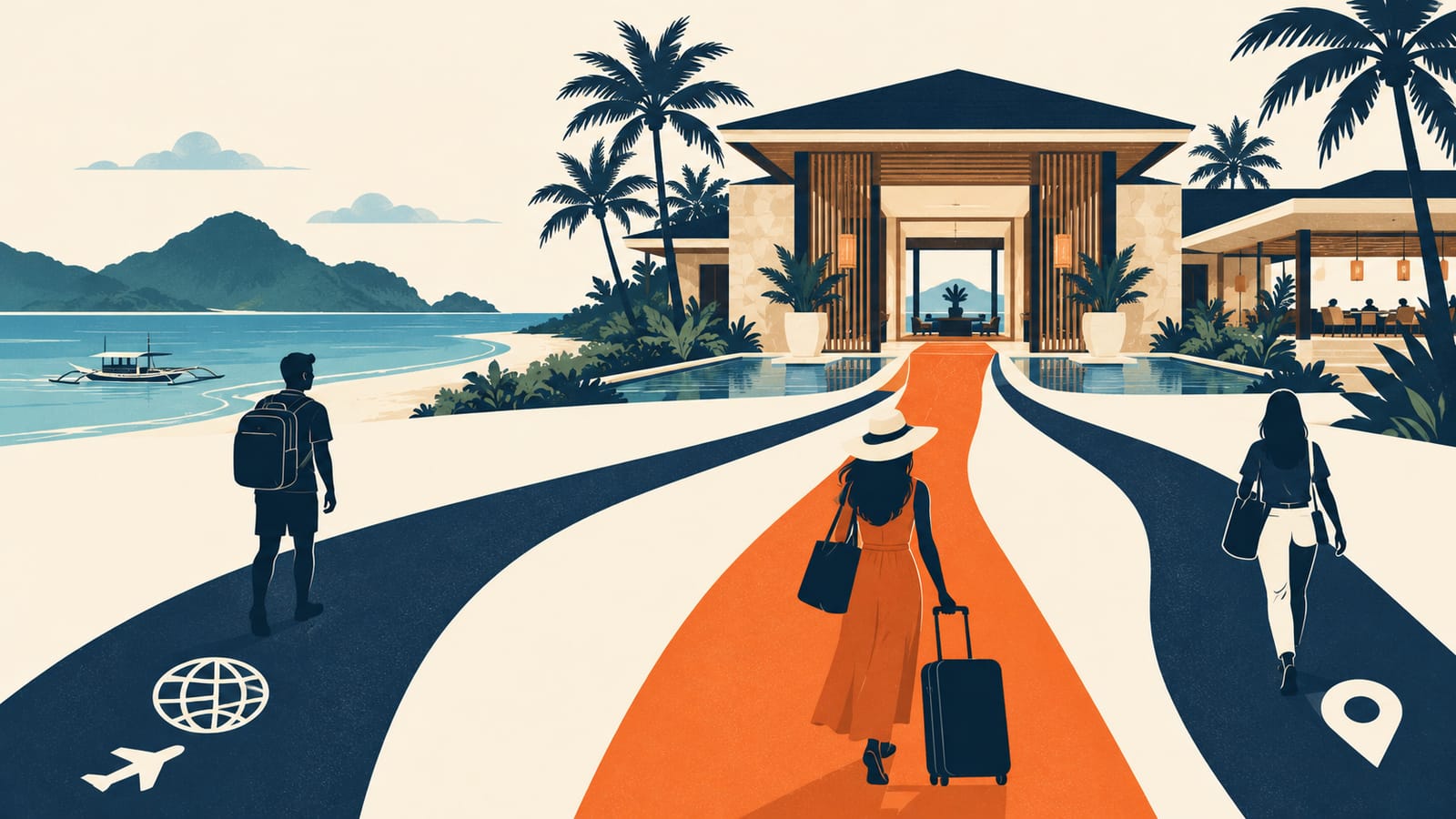
Your three paths from here
This guide covers the core of the framework.
It is enough to change your marketing if you have the time and team to put it to work. Here is what usually happens next.
Do it yourself
Guided
Full management
Your next step
Turn this into a plan for your team.
If you want help putting this into practice, bring one task and its constraints.
Bring the work you want to improve. We will look at the work, the team and the next step.