LOKAL helps e-commerce teams sequence AI across the marketing work they already run. Stord’s 2026 retail and CPG research found 89% using or testing AI, 33% fully implemented and 7% at full scale. The gap is not access. It is the order of operations.
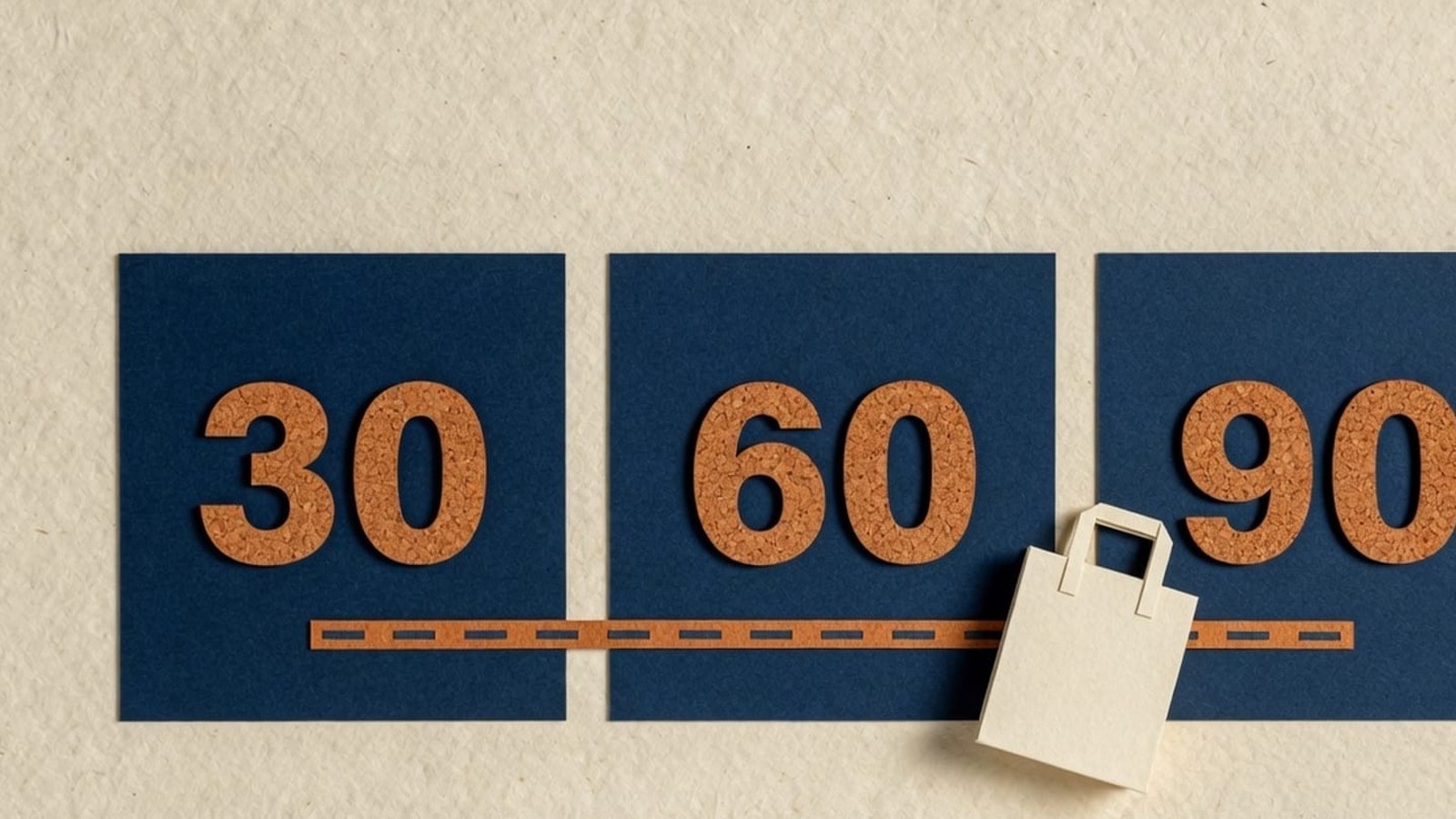
This plan is built for the Philippines: Shopify or WooCommerce plus Shopee, Lazada and TikTok Shop; GCash, Maya, cards, COD. Brands doing ₱1M+ a month usually run three or four of those platforms at once. Three 30-day phases, each with a checkpoint you can measure. Skip a phase and the next one produces motion without a number.
Day 0: the baseline
Write these down.
Screenshot the dashboards. If a number doesn’t exist, that’s a finding — not a reason to skip it. Without this page, Day 90 is a vibe.
| Metric | What you’re capturing |
|---|---|
| Conversion rate by channel | Owned store, Shopee, Lazada, TikTok Shop — separately, not blended. |
| AOV | Same split. COD and prepaid if you can; they behave differently. |
| CS ticket volume and first-response time | Last 90 days. You need this before you write a single macro. |
| Page-one keywords | The category and product terms you already rank for — and the ones you don’t. |
| AI category presence | Ask ChatGPT, Perplexity and Gemini 10–15 “best [category] brand Philippines” questions. Note whether you appear. |
| % of revenue from email | If you don’t know this, email is not a channel you are running. It’s a newsletter. |
This is also the moment to name the stack honestly. Owned store plus three marketplaces is four catalogues, four image sets, four CS inboxes. AI does not merge them for you. It makes it cheaper to keep them consistent — if you brief it that way.
Days 1–30: foundations
Do not start with ads.
Do not start with “get us into ChatGPT.” Start with the three things every order already touches: the listing, the photos, the reply when someone asks a question.
Listings
AI drafts the long-form copy and the attributes; a human edits. Channel-specific formatting, not one blob pasted four ways — Shopee, Lazada, TikTok Shop and your Shopify or WooCommerce page each want a different shape. The review is the work. Unreviewed listings are how you publish confident nonsense at catalogue scale.
Images
Do not go fully synthetic. Use AI for cleanup and background on real photos — dust, colour-cast, a clean white or lifestyle crop — not to invent the product. Fully generated product shots are starting to hurt once shoppers notice. Minimum set: four to six images per SKU, the same set adapted per channel rather than a different shoot for each.
CS macros
Pull the top 20 questions from the last 90 days of tickets. Size, shipping, COD, returns, “where is my order,” the product-specific ones no template ever included. AI drafts the macros; a human signs every one before it can fire. Typical first-contact resolution on those intents is 40–60% on a new programme. Software companies quote 60%+ after six to twelve months of grounding — treat that as a ceiling, not a Day 30 target, and only after you’ve measured it on your own support channel. It still needs an escalation path a person owns. The ticket-type split is in AI for customer support.

Day 30 checkpoint. A sample of listings has been rewritten and reviewed. The image set is real photos, cleaned, not generated. The top 20 macros are live with a named owner. Conversion rate and first-response time have a number next to them that you can compare to Day 0.
Days 31–60: ads, audience, email
Now you have something worth putting spend and a list against. Not before.
Ad variants
Draft more variants than a person would, from the listings you just rebuilt — headlines, primary text, short-form hooks. Minimum two or three live tests, not one “AI campaign.” TikTok Shop’s AI Video Maker is useful here if TikTok Shop is already a channel; it is not a reason to open TikTok Shop. Keep a real host on camera for organic social. Fully synthetic presenters read as ads even when they aren’t, and they train the audience to scroll.
Four email flows
If you only have a newsletter, you do not have email. Stand these four up in days 31–60:
- 01
Welcome
Who you are, what you sell, why buy from the owned store (or the marketplace you want them on), one first-order reason.
- 02
Abandoned cart
The item, the objection you actually hear (shipping, COD, size), one reminder, one way out. Not three discounts.
- 03
Post-purchase
How to use it, when it arrives, how to review, what to buy next. This is where AOV moves.
- 04
Win-back
A reason to come back that isn’t “we miss you.” Timed off last order, not a vibe.
AI is useful here for subject-line variants and first-draft flow copy. That is not a reason to skip the human edit on the first send of each flow. It is a reason to stop writing every email from a blank page.
Day 60 checkpoint. At least two ad tests have enough data to kill or keep. Four flows are live. Email’s share of revenue has a number, even if it’s still small. Social has a real person on camera on a cadence you can point at.
Days 61–90: AEO, analytics, automation
This is the phase people try to start with.
It only pays if the first 60 days exist. Some industry studies report AI-referred sessions converting at a higher rate than generic organic; treat those as directional, not a 90-day target. The prize is being citable when a shopper asks ChatGPT or Gemini what to buy. It is not a blog post titled “ChatGPT’s favourite [category] brands.”

Track it across ChatGPT, Perplexity, Gemini and Google AI Overviews, on the same category questions every time. Citation is a different job from “doing SEO.” For the method, see AI SEO in the Philippines and the e-commerce-specific version on e-commerce SEO.
- Make the pages citable. Product and Organisation schema, FAQ on the SKUs and the category pages, a review-velocity plan so there is something recent to cite. This is markup and operations, not a prompt.
- One reporting pack. Store, marketplaces, ads, email, CS — enough to see whether a listing change, a flow or an ad test moved the baseline you wrote on Day 0. Four platforms without one view is how 90 days vanish into channel reports.
- At least three cross-system automations. Examples that earn their keep: new SKU → draft listing + attribute set for human review; paid order → post-purchase flow; ticket tag → macro with escalation. If you want this built rather than sketched, that’s automation.
Re-run the same 10–15 AI category questions from Day 0. That’s the only AEO checkpoint that matters. “We published schema” is an activity. “We showed up in two answers we didn’t show up in before” is a result.
Day 90 checkpoint. Citations have moved, or you know why they haven’t. One reporting pack is the default view. Three automations are in production, not in a slide. The baseline page from Day 0 has a second column.
What breaks this
The 90 days fail in the same five ways, repeatedly:
- Skipping the baseline. Then every lift is a story. You cannot tell a listing rewrite from seasonality if you never wrote Day 0 down.
- Fully synthetic images. Fast to produce, and increasingly a conversion tax. Clean real photos. Don’t invent the product.
- Unreviewed macros. A wrong shipping time or return rule, sent across most of your ticket volume, is not an efficiency. It’s a CS incident on a timer.
- AEO as a one-off. A single “best of” article does not get you cited. Schema, FAQ, reviews, and a brand that already ranks — then you ask the models again.
- Channels as separate decisions. Shopee, Lazada, TikTok Shop and the owned store will drift unless the listing, the image set and the offer are briefed as one catalogue. AI makes the drift faster if you let each channel prompt itself.
Most e-commerce teams don’t have an AI problem. They have a sequencing problem.
What this costs in the Philippines
Philippine e-commerce marketing typically runs ₱80,000–₱600,000 a month.
Mid-size brands (₱1M–₱5M a month) usually invest 15–22% of revenue. The 90-day plan is a sequencing of that spend — listings, creative, media, email, a bit of build — not a new line item on top of it.
| Where you are | Typical monthly marketing | What the 90 days should do |
|---|---|---|
| Early (under ₱1M / month) | ₱80,000–₱200,000 | Foundations first. Don’t buy an AEO programme. Get listings, photos, macros and two flows honest. |
| Mid-funnel (₱1M–₱5M / month) | 15–22% of revenue | Run all three phases. This is the band the plan is written for — three or four platforms, a list, real spend. |
| Heavier (₱5M+ / month) | ₱600,000 and up, often more | Same sequence, more SKUs, a developer or Shopify Partner in days 61–90, tighter gates on claims and spend. |
If you want this mapped onto the stack you actually run — owned store, Shopee, Lazada, TikTok Shop, the lot — that’s connected marketing: e-commerce in the Philippines. Store build and ops sit with our Shopify Partner work. The AI-search half is AI SEO and e-commerce SEO. The wiring is automation. And if the team needs to run the timed workflow and the brief themselves, Claude for Marketing is the session we teach it in.
Keep going: the AI guides hub and the e-commerce guides sit alongside this, and the Insights archive carries everything else the team publishes.
FAQ
Common questions
How long until we see results?
Listings and CS macros can move within the first 30 days. Email flows and ad tests show up in days 31–60. AI visibility — citations in ChatGPT, Perplexity, Gemini — is a 61–90 game, and it compounds after that. Skipping the baseline makes all three impossible to prove.
Do we need a developer?
Not for days 1–60. Listings, image cleanup, macros, ad variants and email flows are marketing work. Schema markup and some automations in days 61–90 may need a developer or a Shopify Partner — we handle both.
Which tool should we start with?
The one that drafts your listings and macros against your actual catalogue — Claude, ChatGPT or Gemini — plus the AI already inside your ad platforms and email tool. Don’t start with an AEO tool. Don’t start with fully synthetic product images.
Can AI actually get us cited in ChatGPT?
It can help, but only if the underlying pages are citable: Product and Organisation schema, FAQ, review velocity, and a brand that already ranks for the category. A one-off AEO blog post will not fix that. Measure it as citation share on the questions shoppers actually ask, not as a 90-day promise. See AI SEO in the Philippines.
What does this cost in the Philippines?
Most Philippine e-commerce brands spend ₱80,000–₱600,000 a month on marketing. Brands doing ₱1M–₱5M a month typically invest 15–22% of revenue. The 90-day plan is a sequencing of that spend, not a new line item on top of it. Book an e-commerce audit if you want the number against your own stack.
Your next step
Book an e-commerce audit
If you want help putting this into practice, bring one task and its constraints.
We’ll map your baseline — conversion, AOV, tickets, keywords, AI citations, email share — then sequence the 90 days against the stack you actually run: Shopify or WooCommerce plus Shopee, Lazada and TikTok Shop.