AI in the Philippines
The Impact of AI in the Philippines So Far
A practical view of what AI has changed for Philippine business teams, and what remains noise.
Explore the LOKAL AI practice →
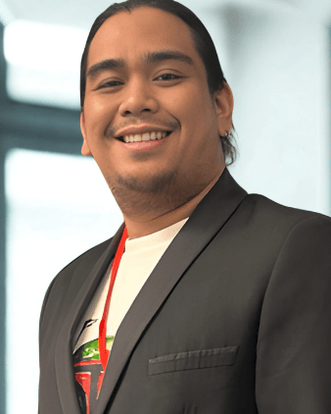

I run marketing and training at LOKAL, from Manila. I've watched AI go from a buzzword on LinkedIn to something my colleagues argue about at lunch. By mid-2026, I think I have enough data points (personal, professional and anecdotal) to say something honest about what has actually changed here, and what hasn't.
The short version: AI is real, it is here, and it has already shifted things in ways that are hard to undo. But most of the biggest promises are still promises. The Philippines is in an interesting middle position: highly connected in urban areas, deeply unequal in others, with a workforce that is both one of AI's biggest targets and one of its fastest adopters.
Five numbers that frame the year
of Philippine jobs carry the highest GenAI exposure; the other 96.4% face less.
That 92% figure deserves a second look.[14] It sounds like AI is everywhere. And it is, in a sense, but 65% of those organisations are still running experiments, not live systems. That gap between "we tried it" and "it is part of how we work" is where most of the real story lives.
Everyday life: GCash, cameras, and the content machine
For most Filipinos, the first encounter with AI wasn't a chatbot. It was GCash.
GCash's credit scoring engine, the thing that decides whether your Negosyo Loan application gets approved, is powered by machine learning. So is the fraud detection that flags an unusual transaction before you even see it. Maya does the same. Millions of people who couldn't get a bank loan now have access to credit because an algorithm looked at their payment history and phone data instead of requiring a payslip and three years of financial statements. That is a genuine shift, not a pilot.
Then there's the content side. ChatGPT, Canva's AI features, and CapCut's auto-edit tools have become standard equipment for small creators and freelancers. I know content writers who produce twice as many articles. I know videographers who finish edits in half the time. Whether the quality held up is complicated (some of it did, some of it didn't), but the output went up, and for a lot of freelancers, that means income went up.
What didn't move much: anything requiring physical presence, consistent electricity, or reliable internet. The AI boom has a Metro Manila shape. Provincial Filipinos using LTE or satellite connections on prepaid data are not running the same workflows as someone on fiber in Makati.
Small business: the sari-sari store is not being automated yet
The narrative about AI replacing small business is mostly wrong for the Philippines right now.
The average sari-sari store owner is not worried about an algorithm. She is worried about wholesale prices and whether her supplier delivered on time.
What AI has touched at the SME level is marketing. Facebook's ad platform has been AI-powered for years, and Filipino small business owners, often running their own social accounts, are unknowingly using machine learning every time they boost a post. Canva Magic Write is being used to draft captions. Some e-commerce sellers use AI tools to write product listings. None of this is a leap; it is incremental. It saves an hour here and there.
The more interesting story is in lending and payments. Fintech platforms are now extending credit to sari-sari store owners and market traders based on digital transaction histories. That is genuinely new. It doesn't make the loan cost less, but it makes access possible where it wasn't before.
BPO: the call-center floor feels it first
No sector in the Philippines is watching AI more carefully than BPO.
It employs well over a million people. It is a significant share of GDP. And generative AI can now handle a lot of what those people do.
The ILO found that 3.6% of Philippine jobs carry the highest GenAI exposure[15], and BPO roles dominate that category. Voice agents, email support, data entry, routine document processing: these are things AI can already approximate and, in some cases, beat on consistency and speed.
The honest answer is that the industry is not collapsing, but it is changing. Most BPO companies right now are using AI to augment agents: handling tier-one queries automatically, feeding agents real-time suggestions, summarising calls so agents don't spend ten minutes on after-call work. That is productivity gain, not replacement. But it also means that the same team is handling more volume. Hiring is slower. Entry-level roles are shrinking.
The workers most at risk are the ones who don't see the shift coming. The ones who are already learning to manage AI workflows, quality-check AI outputs, and handle escalations that AI can't resolve are in roles that are actually growing. The transition is real, but it is not instantaneous. The industry probably has three to five years to retrain its workforce before the pressure becomes structural.
Government: paper forms, then suddenly Gemini
Philippine government AI adoption has been cautious, and that is probably the right call.
In July 2024, the DTI released the National AI Strategy Roadmap 2.0[21], a framework for how the public sector should approach AI development and governance. It is a considered document. The challenge is execution, which is always slower than the strategy.
June 2026 brought something more concrete: DICT announced a partnership with Google Cloud to deploy Gemini tools to more than 50,000 public servants.[16] That is not a pilot. That is the government committing to a toolset at scale. Whether it translates into measurably better public services is a fair question (government IT rollouts in the Philippines have a complicated history), but the direction is clear.
Regulation is developing in parallel. The National Privacy Commission issued an advisory making clear that the Data Privacy Act applies to AI systems processing Filipino citizens' data.[20] This matters for anyone building or procuring AI here. Compliance is not optional, and the NPC has shown it is willing to act.
Education: students are already ahead of the rules
Students are using AI.
Teachers know it and most are unsure what to do about it. Universities have responded with policies ranging from outright bans to full embrace, and the outcomes of neither extreme have been encouraging.
The more useful question isn't "should students use AI?" It is "are students learning how to use AI critically?" And the answer, based on what I see, is: not systematically. The tools are in students' hands. The pedagogy to use them well is not yet in most classrooms.
What does exist is free training. TESDA and UNESCO have made AI and digital skills courses available at no cost[24], including introductory AI literacy. LOKAL has run practical AI workshops for teams who want to learn how to build these into actual workflows. The AI training program is designed for working professionals, not just tech people. The bottleneck now is not availability. It is awareness and follow-through.
What's real, and what's still a demo
Let me be direct about what I think is still more story than substance, at least for the Philippines right now.
Knowledge work
HypeAI replaces most of it within two years
RealTasks shift; full replacement is slowed by cost, connectivity, and inertia
Small business
HypeAI is only for tech companies
RealCanva, GCash, and Facebook Ads are already AI, named or not
The real change
HypeA dramatic robot takeover
RealA freelancer finishing more in less time; a market seller getting a loan she could not before
The idea that AI will replace most knowledge workers in the next two years: hype. The barriers (inconsistent connectivity, dollar-priced subscriptions, organisational inertia and the genuine difficulty of deploying AI in complex, relationship-driven industries) are bigger than the technology optimists admit.
The idea that AI is just a toy for tech companies and has nothing to do with regular Philippine businesses: also wrong, and increasingly out of date. The line between "AI" and "the software we use" is blurring. Canva, GCash, Facebook Ads, CapCut. They are all AI-powered now. You are already using it whether you call it that or not.
The real shift is quieter than the headlines suggest. It is a freelancer finishing more work in less time. A sari-sari store owner getting a loan she couldn't have accessed before. A BPO agent spending less time on after-call notes and more time on actual problem-solving. A government clerk with an AI assistant that can summarise a fifty-page document in thirty seconds.
None of that is the robot apocalypse. None of it is nothing, either.
What comes next
Philippine business teams have several advantages in adopting AI.
English fluency, a young workforce and strong urban digital adoption help. Infrastructure inequality, dollar-priced subscriptions and a thin talent pipeline still slow adoption.
What I think matters most in the next two years is not which AI tool wins. It is whether Filipino workers, students, and business owners build actual fluency with these tools, not just passing awareness. The people and organisations that are learning to work with AI rather than around it are going to have a structural advantage. That advantage compounds.
If you want a practical map of what tools are worth your time and budget, the AI in the Philippines 2026 guide is the place to start. If you are trying to understand what things actually cost (subscriptions, API access, local alternatives), the AI tool and model pricing guide has the current numbers. To compare every major AI tool and model side by side, with prices in pesos and Australian dollars, see our AI tools and models directory.
The story is still being written. But the draft so far is more interesting than either the optimists or the skeptics are giving it credit for.
Sources
- The Philippine AI Report 2025 Private consultancy survey of 175 Philippine organizations (fielded Oct–Nov 2025); not a government statistic. View source ↗
- Generative AI and Jobs in the Philippines: Labour Market Exposure and Policy Implications 3.6% of jobs in the highest GenAI-exposure category; about 12.7M jobs exposed. Published 5 February 2026. View source ↗
- DICT and Google Cloud Partner on Multi-Year AI and Cybersecurity Initiatives 50,000+ public servants initially, expanding to 200,000 within 18 months. Announced June 2026. View source ↗
- NPC Advisory No. 2024-04 — Guidelines on AI Systems Processing Personal Data Issued 19 December 2024. The Data Privacy Act applies where personal data is processed in AI development or deployment, including training and testing. View source ↗
- National AI Strategy Roadmap 2.0 (NAISR 2.0) Adopted 3 July 2024; establishes the Center for AI Research (CAIR). View source ↗
- UNESCO and TESDA — Free Digital Skills and AI Courses via Global Skills Academy and HP LIFE Free government courses including digital skills; TESDA–UNESCO AI access expansion reported in 2026. View source ↗
FAQ
Common questions
Has AI actually changed everyday life in the Philippines?
Yes, though unevenly. GCash and Maya both use AI for fraud detection and credit scoring. Millions of Filipinos use ChatGPT and Canva's AI features daily. But rural access gaps mean the benefits land disproportionately in Metro Manila and other urban centres.
Is the BPO industry under serious threat from AI?
Somewhat, but the picture is more nuanced than the headlines suggest. The ILO found 3.6% of Philippine jobs face high GenAI exposure, many in BPO. Most firms are augmenting agents with AI tools rather than replacing them outright, at least for now. The real risk is for workers who don't adapt over the next three to five years.
What is the Philippine government doing about AI?
The DTI released the National AI Strategy Roadmap 2.0 in July 2024. In June 2026, DICT and Google Cloud announced a partnership to deploy Gemini across 50,000+ public servants. Regulation is still developing; the NPC has issued an advisory applying the Data Privacy Act to AI systems.
Are there free AI training options in the Philippines?
Yes. UNESCO and TESDA offer free AI and digital skills courses through partnerships including the Global Skills Academy and HP LIFE programs. DICT has also run public digital literacy programs. Access is free; the barrier is awareness and internet connectivity.
Should Filipino small businesses be using AI tools now?
Most already are, even if they don't call it that. Canva Magic Write, GCash lending, and Facebook's ad automation are all AI-powered. The question for SMEs is whether to go further with dedicated tools, and the honest answer is: start simple, automate one thing at a time, and measure it.
Your next step
Put this into practice with your team.
LOKAL can train your team, plan adoption, apply workflows and run the ongoing systems with you.