AI & Recruitment
AI and Executive Recruitment in the Philippines
How Philippine recruiters use AI for sourcing, screening and market mapping, and where human judgement still decides.


The way we hire has changed rapidly. With 73% of companies now using recruitment automation, AI is playing a huge role in the shift from traditional headhunting to smarter, more efficient talent acquisition. Let's dive into how AI is transforming executive recruitment in the Philippines.

The Foundation: Traditional Headhunting
For a long time, executive recruitment in the Philippines was all about personal networks and industry expertise.
Headhunters built their businesses on relationships, meeting candidates in person, and using their deep knowledge of the market.
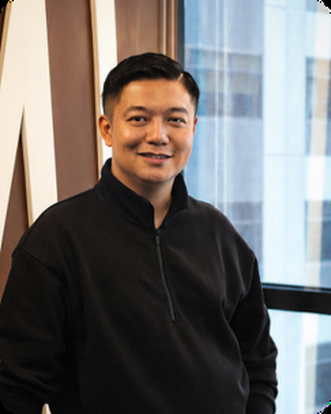
"Headhunting is a specialised process, focused on building relationships and connections supported by profile research. As you build your business, you also grow specialisations and leadership roles. Personal connections and networks must also grow with this, which takes time."
— Calo Sison, a seasoned recruiter in the tech industry
This approach worked well for many companies because it was highly personalised.
But as business needs evolve, the limitations of traditional headhunting have become clear:
- Talent pools are geographically limited
- Recruitment processes are time-consuming and hard to scale
Despite these challenges, traditional recruitment still has some core strengths, like building trust and assessing candidates holistically.
The AI Revolution: Transforming Executive Search
The integration of artificial intelligence into recruitment is reshaping how Philippine companies hire top executives. Here's how AI technology is redefining the recruitment process:
1. Smart Profile Creation and Candidate Sourcing
- AI makes finding the right candidates faster and more accurate. Here's how:
- AI tools create profiles that match the specific leadership needs of a company.
- AI searches vast networks like LinkedIn and JobStreet to find candidates.
- It even uses Boolean search to make sure the matches are spot on.
- Outreach is automated, meaning less manual work for recruiters.
"AI is a big help in hastening the research part of market mapping, from analysing leadership structures and hiring trends to compiling key stats that could influence hiring decisions. Tools like EYQ and Microsoft Copilot make the legwork faster and more efficient."
— Seamus Hermoso, a veteran tech and finance HR professional
2. Faster Screening and Evaluation
AI excels at screening resumes and filtering candidates:
- It can process thousands of profiles in minutes.
- Consistent criteria help reduce human bias and make assessments fairer.
- Screening takes less time, letting recruiters focus on the more strategic parts of the hiring process.
"Our in-house AI tool can decipher keywords within a resume, analyse the content, and grade candidates in relation to the job description," says Seamus. While not perfect, these tools significantly reduce time spent sifting through resumes, allowing recruiters to focus on engagement.
3. Data-Driven Decision Making
AI doesn't just find candidates—it also helps recruiters make smarter decisions:
- Predictive analytics use data to assess how well a candidate might perform, based on past hires.
- Scoring models rank candidates on leadership potential, so recruiters can focus on the strongest ones.
- AI constantly refines its algorithms to improve hiring outcomes.
AI enables predictive analytics and scoring models, helping recruiters identify the best candidates for leadership roles. "Talent insights that would take weeks to gather manually can now be processed by AI in seconds," notes Seamus.

4. Reducing Bias and Increasing Efficiency
AI is also great for promoting fairness in recruitment:
- Anonymised data helps reduce unconscious bias during the screening process.
- By automating repetitive tasks, AI lets recruiters focus on more meaningful work, like building relationships.
Human + AI: The Perfect Partnership
While AI makes recruitment more efficient, it doesn't replace the need for human recruiters.
In fact, the best results come when AI and human expertise work together.
"AI definitely helps in crafting job descriptions and profile assessments, which takes time off the normal recruiting rhythm to let the recruiter focus on interviews and crafting detailed endorsements," says Sison. "At this point, we're looking at AI as a productivity tool, much like Excel replaced accounting books in the past. This enables professionals to work efficiently and spend time on what matters – interviews and endorsements."
Here's what AI excels at:
- Automating repetitive tasks
- Improving data accuracy
- Speeding up recruitment timelines
But human recruiters still bring important skills to the table:
- Building long-term relationships with clients and candidates
- Assessing cultural fit, which is especially important in Filipino workplaces
- Navigating complex needs and understanding the unique challenges of each company
Case in Point: AI Integration in Philippine Recruitment
The Philippines has embraced AI at work.
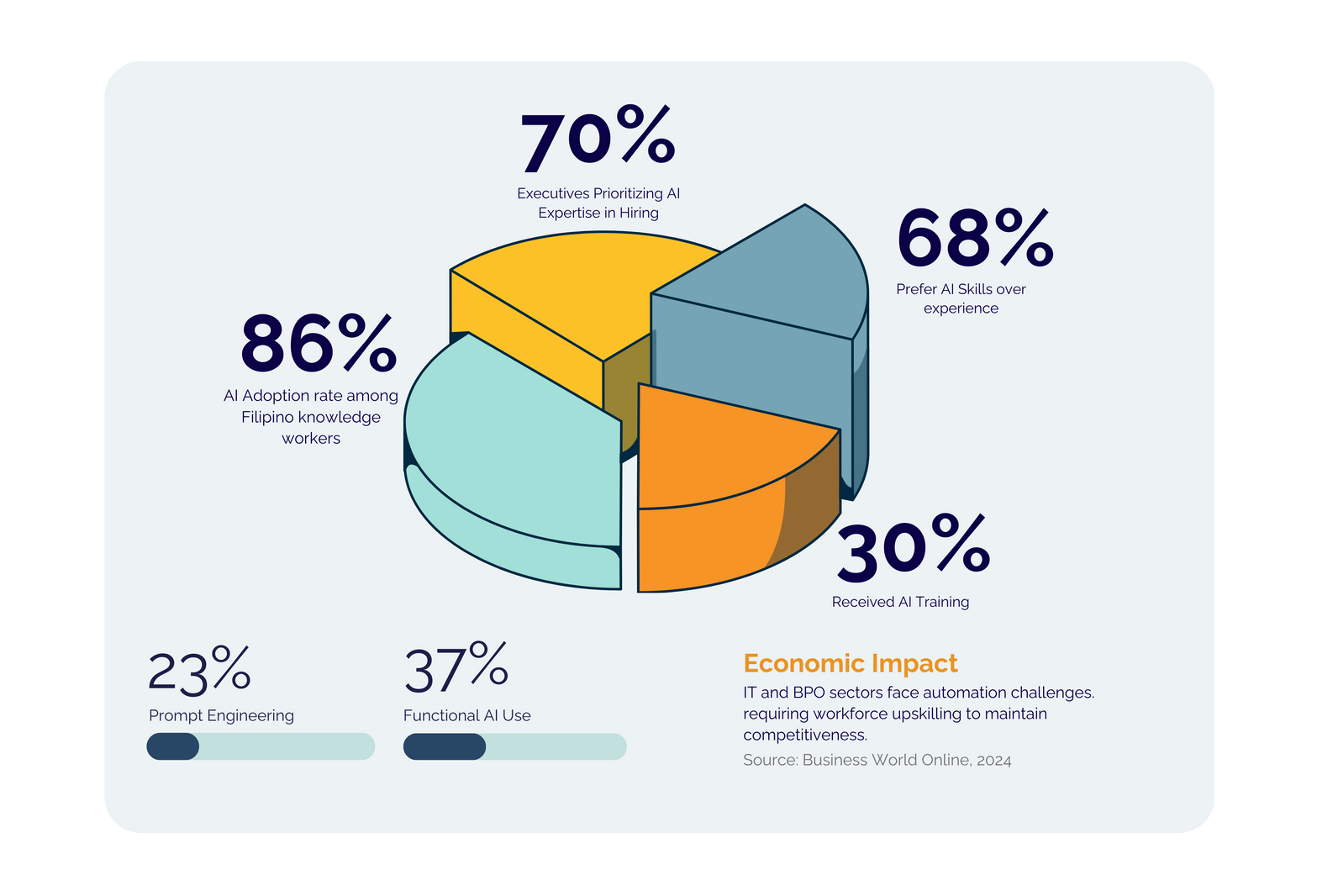
86% of Filipino knowledge workers use generative AI, above the global average (Microsoft and LinkedIn, 2024 Work Trend Index). Many HR professionals are now focusing on leveraging AI to improve hiring processes while upskilling themselves to work effectively with this technology.
AI Adoption and Workforce Trends in the Philippines
Sison and Hermoso both stress that AI hasn't replaced them. It has amplified what they can do.
However, there's a need for a shift in mindset. "Don't be afraid of AI taking your jobs," advises Seamus. "Be afraid to 'not know how to use AI.' It's like the internet years ago—those who didn't adapt were left behind."
Best Practices for Implementing AI Recruitment in the Philippines
If you're looking to bring AI into your recruitment process, here are some tips to get started:

1. Start Small and Scale Gradually
Test AI tools for specific tasks, like sourcing candidates, before rolling them out across the entire process.
2. Train Your Team
Make sure your recruitment team knows how to use AI tools effectively. This means understanding both their strengths and limitations.
Sison emphasises the importance of developing proper AI prompts:
"For generative AI types, developing prompts will be a necessary skill. For example, when developing an assessment process for a specific skill requirement, a recruiter might start with: 'I am a recruiting professional looking to fill an executive sales leadership role. How do I assess for...' From this, the prompt can be modified depending on what answers are generated."
3. Keep the Human Element
Even with AI, it's important to maintain personalised communication with candidates to preserve the trust and relationships that Filipino companies value.
4. Measure Performance
Track key metrics like time-to-hire, candidate satisfaction, and diversity to see how well AI is improving your recruitment process.
Looking Ahead: The Future of AI in Philippine Recruitment
AI is rapidly reshaping executive recruitment in the Philippines, with developments pointing toward even more sophisticated applications.
While automated tools are becoming increasingly advanced, the future of recruitment lies in the strategic fusion of AI capabilities with human expertise.
Sison describes current AI as a productivity tool that can save time, especially when developing assessments or improving existing recruitment processes. Prompts matter, while human input and judgement remain essential to scrutinise and validate results.
To make AI work effectively in the Philippine context, companies must:
- Ensure alignment with local labour laws and data privacy regulations, particularly the Data Privacy Act
- Invest in continuous training to keep recruitment teams current with evolving AI capabilities
- Maintain a balance between automation and the high-touch, relationship-based approach valued in Filipino business culture
The future of executive recruitment in the Philippines isn't about choosing between AI and human expertise—it's about using both to create more efficient hiring processes that serve both companies and candidates better.
— Continue reading
Two more pieces on hiring.
Executive Recruitment in the Philippines

Smart Hiring in the Philippines

Your next step
Turn this into a plan for your team.
Bring the work you want to improve. We will look at the work, the team and the next step.