
ON CRAFT & AI
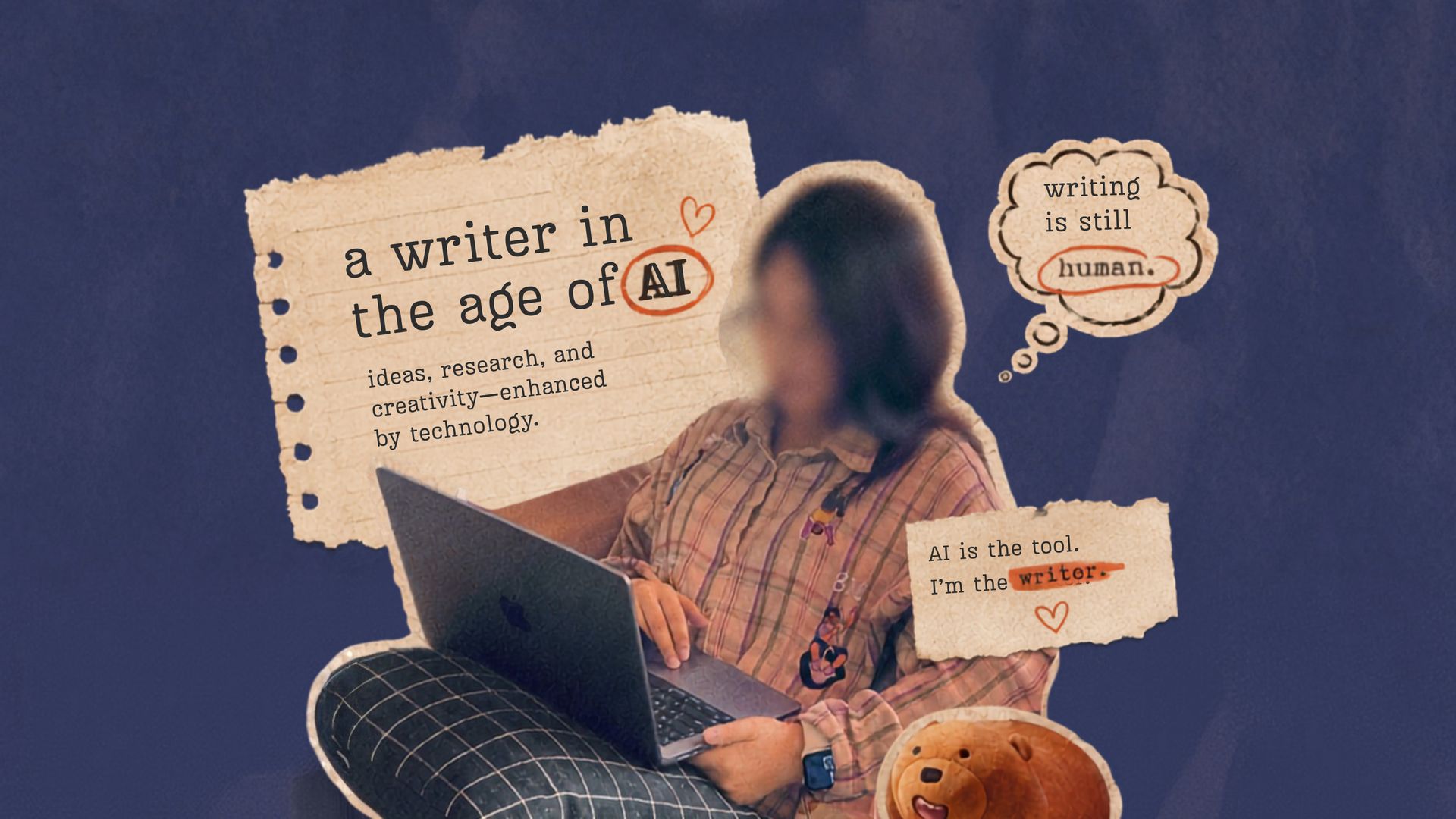
How I Write in the Age of AI
What happens when a writer works alongside a machine

-1920w.jpg)
One of the most common assumptions about writers today is that AI does all the work. After all, if a tool can generate an entire article in seconds, what exactly is left for the writer to do?
I say that as someone who uses AI almost every day. It's part of my workflow when I'm researching unfamiliar topics, brainstorming angles, or trying to get unstuck on a draft. In many ways, it has made me a faster and more efficient writer. LOKAL is my first writing job, and I write most of these pieces from a desk in Tacloban City, a long way from the hotels and resorts I'm describing. I've never set foot in the lobbies I write about. AI helps me close that gap, pulling together details I could never gather in person — but making those places feel real to someone who's never been there is still on me.
Ironically, using AI every day has made me appreciate the human side of writing even more.
Where AI Fits Into My Writing Process
Used well, AI is leverage. I can pull a dozen viable angles out of a single topic and trend in minutes, test titles until one earns the click, or break a sentence that won't sit right. I've helped streamline and automate large portions of our blog workflow, making it possible to produce content at scale without relying on me for every step.
That's the point: it clears the volume so I can spend my attention where it actually moves a piece. Which angle is worth chasing. What the client really needs the page to do. Where to spend the reader's attention. The tool handles output. I handle the judgment.
But the longer I've worked with it, the more I've noticed something interesting: the value of writing was never in producing words quickly. The real work happens in the decisions around those words. Knowing what to question, what to keep, what to rewrite, and what to make unmistakably your own.
That's where I think the conversation around AI often misses the point.
Why Faster Research Doesn't Mean Better Writing
When I'm assigned a topic I know nothing about, AI is the first place I go. It can explain a technical subject in plain language, summarize a 40-page report, or give me a working overview of an industry I've never written for. What used to take a morning of scattered Google searches now takes ten minutes.
I learned something early, though: AI is an excellent research assistant and a terrible fact-checker of its own work. It will state a wrong statistic with the same calm confidence it uses for a right one. No hesitation, no flag, nothing in the phrasing that says "maybe double-check this."
So the time I save on research, I now spend on verification. I trace claims back to actual sources. I check whether the reviews it cited exist. I look for the small inconsistencies — a date that shifts between paragraphs, a quote that sounds a little too convenient. The faster AI works, the more important that checking becomes. Otherwise I'm just publishing confident guesses.
When I Don't Know Where to Start
I'll admit something most writers won't: the blank page still scares me. Some days the hardest part of an article is the first sentence, and I can lose an hour circling it.
AI fixed that, sort of. It doesn't write my openings. What it gives me is something to react to, which turns out to be enough. I'll ask for an outline and immediately see what's wrong with it. I'll ask for five angles on a topic and realize the sixth one — the one it didn't suggest — is the piece I actually want to write.
Disagreeing with a bad version is so much easier than inventing a good one from nothing.
That reaction is the work. The draft that ends up published rarely resembles whatever the tool gave me.
The Biggest Giveaway: AI Doesn't Sound Human
This is the part nobody warned me about. After reading AI-generated text every day for a couple of years, I started seeing the patterns. The same transitions appearing in article after article. Ideas forced into tidy groups of three. Observations so general they could apply to anything. Prose so evenly polished it has no texture at all.
And the em dashes. Everywhere, the em dashes.
The funny thing is I used em dashes long before AI was mainstream. They were a stylistic choice I was a little proud of. Then I watched AI lean on them in nearly every paragraph, and the habit I thought was mine started looking like a pattern I'd been assigned. I use them sparingly now.
It helps that I learned to write before any of these tools existed. Back in school, I wrote my essays and research papers myself, without AI, ChatGPT, Grammarly or any of the things students reach for now. You feel every sentence when you have to build it by hand, and I think that's part of why I can hear when writing has no struggle in it.
So a large share of my editing time goes to making text sound like a person wrote it. I put back the imperfections. I let a sentence run long when that's how I'd say it out loud, or cut one short. When a Filipino expression captures something better than the polished English version, the expression stays.
Readers don't connect with flawless writing. They connect with a voice they can recognize, and recognizable voices have quirks.
What AI Still Can't Do
AI has never missed a deadline. It can describe one, sure, in fluent and convincing detail. But it can't remember the specific dread of watching a clock at 11pm with 800 words still to write, or the email you drafted three times before sending. I can. That memory shows up in my writing whether I invite it or not.
It has no opinions, only averages of other people's. It has never changed its mind about something and felt embarrassed about the old take. It doesn't know which detail in an interview mattered emotionally — the pause before an answer, the thing the person almost said. Those judgments come from having sat in the room.
That gap isn't small. It might be most of what makes writing worth reading.
The Future Isn't Human Versus AI
I don't see AI as a replacement for writers. I see it as a tool that removes friction from the process. Research that used to eat a whole morning now takes minutes. Brainstorms are easier because I'm never starting from zero. First drafts arrive quicker, even when they arrive wrong.
But the final responsibility still belongs to the writer, and that responsibility is bigger than it sounds. We verify the facts, because the tool won't flag its own mistakes. We decide what deserves emphasis and what gets cut, because a model has no idea which detail will actually land with a reader. We shape the voice, sentence by sentence, until the writing sounds like a person. And we bring experience to the page — the deadlines we missed, the opinions we earned by being wrong a few times first.
None of that shows up in a prompt. It shows up in the work. In an age where anyone can generate words, being human may be the most valuable writing skill of all.
— Continue reading
Three more pieces from the field.
What is Meta Business AI and how can it help your business?
What Happens When AI Can't Find Your Hotel

Unlocking Productivity: A Look Inside LOKAL's Practical AI Skills Workshop
Keep reading
Related reading
Done-for-you
Would you rather a team ran this for you?
LOKAL runs Total Visibility for brands across AI search, SEO, and marketplaces: strategy and execution under one roof.